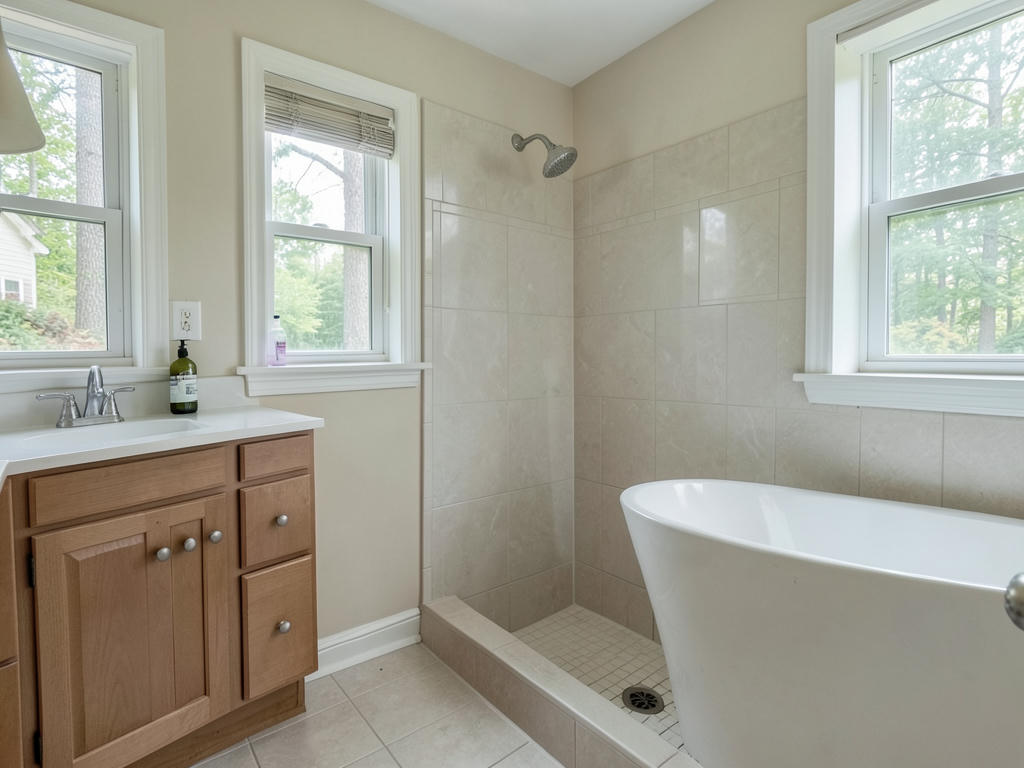
Home/Bathroom Remodeling/Bathroom Tile Installation
Go2you Construction LLC
Bathroom tile installation in Clarksville, TN
Plan the surface beneath the finish
Bathroom tile installation in Clarksville, TN starts with understanding the surface beneath your floor or shower walls. We offer this work as part of residential remodeling, helping you address worn finishes and plan tile around how you use your bathroom.
How should you plan bathroom tile installation in Clarksville?
A useful bathroom tile plan starts with the surfaces you want to change and the problems you want to solve. Tell us about loose pieces, cracked grout, slippery flooring, stained joints, or areas that stay damp. A cracked tile may reflect movement underneath rather than a problem with the tile itself. Replacing the visible finish without addressing that movement can leave the cause in place. Photos, rough room measurements, and a description of previous leaks help frame the conversation, although concealed conditions may not become clear until existing materials are removed.
Decide whether the work covers the bathroom floor, shower walls, a tub surround, or several connected surfaces. Each area has different requirements for water exposure, traction, and edge details. Identify anything that will remain, including the vanity, toilet, tub, doors, and adjacent flooring. Tile thickness can affect clearances and transitions, so those details belong in the plan early. If tile is one part of a larger update, our bathroom remodeling work also covers changes to fixtures and the room itself. Discuss that broader scope before choosing finishes.
Which tile works for bathroom floors and shower walls?
Tile should be selected for its intended location, not just its color or pattern. Porcelain generally absorbs less water than many ceramic tiles, but both still need a suitable installation system. Wall-only tile should not be used on a floor. For bathroom floors, check the manufacturer's guidance for wet use and traction rather than assuming a textured appearance means slip resistance. Bring samples into the room and look at them under your actual lighting. A finish that looks soft in a showroom can appear glossy or show more variation at home.
Tile size changes both the look and the preparation needed. Large-format pieces need particularly flat surfaces to limit uneven edges, while small mosaics create more grout joints to clean. Shower floors also need tile that can follow the planned drainage slope. Natural stone may require sealing and stone-compatible cleaners; some stones react poorly to acidic products. Grout color, joint width, trim profiles, and exposed edges deserve decisions before installation starts. For a project involving shower remodeling, coordinate the tile with the shower base, drain, niches, and any glass attachment locations.
What happens beneath bathroom tile?
Tile needs a sound, properly prepared base to perform as intended. Removal exposes the existing floor or wall assembly so damaged materials, movement, and uneven areas can be evaluated. Soft subflooring or deteriorated wall material should not simply be covered with new tile. The suitable repair depends on what is found and on the assembly being installed. Floors may need patching or flattening, and walls may need correction before layout begins. Ask which preparation steps are included and how any concealed damage would change the agreed scope before additional work proceeds.
Wet areas need a waterproofing system because tile and grout alone do not make a shower watertight. Backer board, membranes, seams, corners, and pipe penetrations must work together according to the selected system's instructions. Cement board is not automatically a waterproof barrier. Shower bases also need a correctly formed slope so water moves toward the drain rather than collecting in low spots. Where applicable, testing should happen before the surface is covered. If you are planning a tub-to-shower conversion, establish the new base and waterproofing details before finalizing the tile layout.
How long does bathroom tile installation take?
Bathroom tile installation usually takes several stages spread across multiple days, with additional time possible for repairs and curing. Demolition and preparation come first, followed by waterproofing where required, layout, setting, grouting, and flexible sealant joints. Some stages cannot safely be compressed into the same day. Mortar, membranes, grout, and sealants each have product-specific waiting periods, and temperature or moisture conditions can affect them. Ask separately when you can walk on the floor, reinstall fixtures, and use the shower; those milestones may occur at different times.
The room's size is only one factor in the schedule and scope. Extensive demolition, damaged framing or subflooring, uneven walls, elaborate patterns, niches, numerous corners, and many small cuts all add work. Large tiles can demand more preparation even when there are fewer pieces to set. Layout should be checked before bonding begins so visible cuts, grout lines, and focal points are intentional. After setting, grout fills the joints, while appropriate flexible sealant handles changes of plane and other movement locations. A final check should address edges, transitions, residue, and care instructions.
How do you prepare for bathroom tile work?
Preparing for tile work means clearing the room and planning around limited bathroom access. Remove toiletries, rugs, decorations, and items from nearby shelves or cabinets that may be affected. Discuss access routes, material storage, debris handling, and which fixtures need removal. If this is your only bathroom, ask how toilet and bathing access will be affected at each stage rather than assuming the room stays usable. Have tile selections, matching trim, and other required materials settled before demolition when possible. Product availability can otherwise interrupt the sequence.
Before work begins, ask for clarity on demolition limits, substrate repairs, waterproofing, layout approval, grout selection, and the treatment of exposed edges. Confirm who supplies materials and what happens if additional tile is needed. Keep a few matching spare pieces for possible future repairs. If you found us by searching for bathroom tile installation near me, we serve Clarksville and the listed surrounding communities, including Sango, Woodlawn, and Adams. Call us at (931) 220-4607 to discuss your surfaces, current concerns, and how the tile work fits your planned residential remodel.
Questions
Questions to ask before replacing bathroom tile
What is a realistic budget for a bathroom remodel?
A realistic budget depends on the room's condition, the surfaces being replaced, and whether fixtures or plumbing locations change. For tile work, preparation, waterproofing, material selection, and layout complexity all affect scope. We recommend defining those details before comparing proposals so you can distinguish finish choices from necessary repairs beneath the tile.
Can new bathroom tile be installed over existing tile?
Tile can sometimes be installed over existing tile, but only when the existing assembly is sound and the installation products allow it. Loose pieces, moisture damage, poor adhesion, or excessive finished height can rule that approach out. Covering an old surface also leaves its concealed layers in place, so removal may be needed to assess underlying problems.
Does bathroom grout need to be sealed?
Some bathroom grout needs sealing, while other formulations do not; follow the specific manufacturer's instructions. Sealer can help certain grout resist staining, but it does not replace waterproofing beneath shower tile. Use compatible cleaners and avoid treating every grout product the same way. Ask for the product name and maintenance directions before the bathroom returns to use.
Can you replace cracked tiles without retiling the whole bathroom?
Individual cracked tiles can sometimes be replaced if matching pieces are available and the surrounding installation is sound. The cause of the cracking still needs attention. Movement, inadequate support, or moisture damage may require a broader repair. In a shower, removing tile can also disturb waterproofing, so the repair plan must account for the underlying system.
How soon can you use a newly tiled shower?
You should use a newly tiled shower only after all installed products have reached their required water-exposure cure times. Grout that feels dry is not necessarily ready for repeated soaking, and sealant may have a different waiting period. Ask for a clear return-to-use date based on the actual mortar, grout, waterproofing, and sealant used.