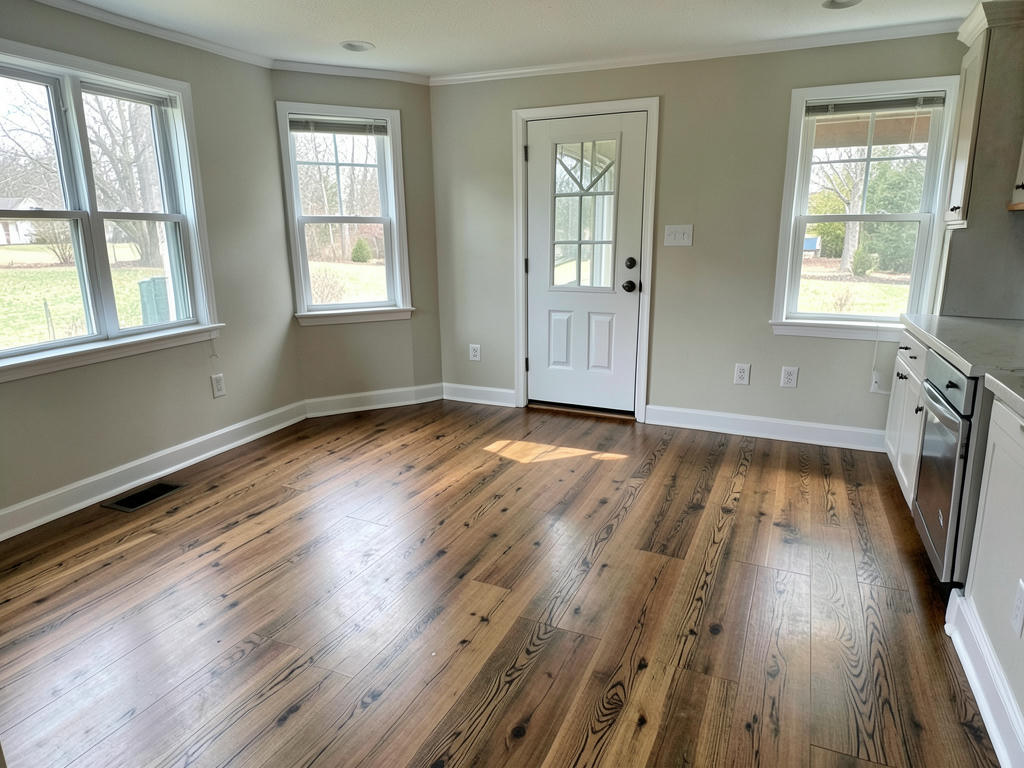
Home/Flooring & Interior Updates/Baseboard Installation
Go2you Construction LLC
Baseboard installation in Clarksville, TN
Finish the transition between walls and floors
Baseboard installation in Clarksville, TN finishes the wall-to-floor transition and replaces worn or mismatched trim. We help you plan this interior update around your flooring, door casing, room layout, and the details that affect how the finished trim fits.
When should you replace your baseboards?
Replacing baseboards makes sense when existing trim is damaged, inconsistent, or poorly fitted to the room. Split ends, missing sections, bulky paint buildup, and open joints can make otherwise finished walls look incomplete. New flooring can also expose old paint lines or leave the original trim sitting at an awkward height. We offer baseboard installation as part of our flooring and interior updates. Before choosing a replacement, consider whether you want to match adjoining rooms or establish a different profile throughout a connected space.
Not every visible gap calls for replacement. A small separation along a painted wall may be a finish-maintenance issue, while a bowed board or swollen lower edge deserves closer inspection. Trim should not conceal an active leak, damp wall, or damaged wall surface. Those conditions need attention before new material goes in. Look at the entire run rather than one corner: uneven floors, layers of older trim, and changes in door casing can all influence whether a limited repair or full-room replacement is the more practical approach.
Which baseboard material and profile should you choose?
Baseboard material should suit the room's moisture exposure and intended finish. Primed MDF offers a smooth painted surface but is vulnerable to swelling when exposed to water. Finger-jointed wood is commonly used for painted trim, while solid wood can suit a stained finish when the species and grain are selected accordingly. PVC resists moisture, though its fastening, movement, and paint requirements differ from wood products. We can discuss your room and preferred appearance; the material decision should come before purchasing matching corners, shoe molding, or additional trim pieces.
Profile and height affect how the baseboard relates to the rest of the room. A taller board can cover an old paint line, but it must still meet door casing without an awkward projection. Thickness matters as much as height at those intersections. Simple square-edged profiles tend to emphasize straight lines, while shaped profiles introduce more detail and require careful alignment at corners. Bring a sample or clear photo of existing trim if matching is important. Check actual dimensions, since nominal sizes and similar-looking profiles are not always interchangeable.
How are baseboards measured, cut, and installed?
Baseboard installation starts with measuring each wall and planning joints, corners, and stopping points. A useful layout accounts for door openings, short wall returns, closets, and long runs that require more than one board. If old trim is being removed, scoring the painted edge first helps limit tearing of the wall surface. Removal can reveal broken drywall paper, protruding fasteners, or uneven backing. Necessary drywall repair and installation should be addressed before fitting the new trim so the boards have a suitable surface behind them.
Fitting comes before final fastening. Inside corners may be coped or mitered depending on the profile and conditions; outside corners need cuts that match the actual angle rather than an assumed square corner. Long-wall scarf joints can make board transitions less conspicuous when fitted and positioned thoughtfully. Fasteners need suitable backing, with care around concealed utilities. Nail holes and paintable wall-edge gaps are then prepared for the selected finish. Caulk is not a substitute for accurate cuts, and floor expansion spaces should remain clear where the flooring manufacturer requires them.
What affects the scope of baseboard installation in Clarksville?
Room layout and existing conditions affect the work more than floor area alone. A room with many doorways, angled walls, and small returns can require more fitting than a larger rectangular room. Removing old adhesive, repairing wall damage, or matching an unavailable profile adds separate tasks. Furniture access also matters, especially along walls with heavy cabinets or beds. When you contact us about baseboard installation in Clarksville, tell us which rooms are involved, whether existing trim remains in place, and whether flooring or painting is also planned.
Installation time depends on preparation, cutting complexity, and the finishing sequence. Measuring and dry-fitting may take a substantial share of the work even when fastening goes relatively quickly. Filled nail holes, primer, caulk, and paint may require separate drying periods according to product instructions. Several rooms can also require staged access rather than one continuous work area. If flooring installation is part of the project, confirm the order before work begins: floor thickness, required perimeter clearance, and whether baseboards are removed or retained all affect the finished transition.
How should you prepare for new baseboards?
Preparing the room means making the wall perimeter accessible and settling the main finish decisions before cutting begins. Move small furniture, rugs, cords, and fragile belongings away from the work area. Discuss heavy items rather than assuming they can remain against the wall. Keep children and pets outside the cutting and installation space. Identify any known leaks or previous water damage, and point out outlets or unusual wiring near the floor. If you plan to reuse existing trim elsewhere, mention that before removal because careful salvage changes the task.
A clear scope should identify material, profile, rooms, removal needs, and responsibility for filling, caulking, priming, and painting. Ask how exposed ends will terminate and whether shoe molding is needed; it should not be treated as automatic. Photos of corners, door casing, and floor transitions help explain the conditions. If you searched for baseboard installation near me, we serve Clarksville and the listed surrounding towns, including Sango. Call (931) 220-4607 to discuss your project. Our hours are Monday through Friday, 7:00 a.m. to 5:00 p.m.
Questions
Questions to ask before replacing baseboards
Can I replace baseboards without replacing the floor?
Yes, baseboards can usually be replaced while keeping the existing floor. The new trim needs to cover the perimeter appropriately without restricting any required flooring movement. Removal should protect the floor surface, and the replacement profile should account for old paint lines, existing shoe molding, and differences in board thickness.
Do new baseboards need shoe molding or quarter round?
No, new baseboards do not always need shoe molding or quarter round. Additional molding may help cover a required flooring gap or follow minor floor irregularities, but it changes the appearance and projection of the trim. The choice depends on floor conditions, baseboard thickness, and the flooring manufacturer's installation requirements.
Should baseboards be painted before or after installation?
Baseboards can receive initial coats before installation, but cut edges, nail holes, and joints usually need finishing afterward. The best sequence depends on the material, finish product, and room access. Confirm who handles final preparation and painting so you know whether the installation scope ends with fitted boards or includes later finish work.
Can new baseboards fix uneven walls and floors?
New baseboards can accommodate minor irregularities, but they do not straighten walls or level floors. Careful fitting, selective scribing, and suitable finish detailing can improve the transition. Larger dips, damaged wall edges, or moisture-related movement need separate attention rather than being hidden behind oversized trim or excessive caulk.
What information should I provide when calling about baseboard installation?
Provide the rooms involved, approximate wall lengths, photos, and whether old baseboards need removal. Tell us your preferred material or profile, any planned flooring changes, and whether painting is part of your request. Close-up photos of door casing and corners are especially useful when you want the new trim to match existing details.