Home/Flooring & Interior Updates/Drywall Repair and Installation
Go2you Construction LLC
Drywall repair and installation in Clarksville, TN
Plan the repair, not just the patch
We offer drywall repair and installation in Clarksville, TN for residential remodeling projects. Tell us about damaged walls, exposed framing, or changes to your rooms so we can discuss the work needed before you choose finishes.
Should damaged drywall be patched or replaced?
The condition of the surrounding board matters more than the size of the visible mark alone. A small impact hole in firm, dry drywall often needs a supported patch rather than a whole new sheet. Crumbling edges, widespread damage, or softened gypsum can require a larger cutout. We offer drywall repair and installation in Clarksville as part of residential remodeling. Before discussing the finish, tell us where the damage is, how it happened, and whether it has changed over time.
Water stains, recurring cracks, and loose fasteners deserve attention before cosmetic repairs begin. A leak or condensation problem needs to be addressed before damp material is enclosed. Cracks that keep returning may reflect movement rather than a simple surface defect; drywall compound alone cannot resolve that underlying cause. For a remodeling opening, the scope also depends on what is behind the wall. Wiring, pipes, framing, and insulation can affect where a cut is practical and how the replacement board gets supported.
How is drywall installed and finished?
Drywall installation starts with a sound backing surface and a plan for sheet placement. Generally, framing is checked for alignment, panel edges are positioned over support, and sheets are cut around openings. Fasteners should hold the board securely without tearing through its paper face. Repairs follow the same principle on a smaller scale: loose material is removed, backing is added where needed, and a fitted piece is secured. An unsupported patch can flex, making the finished joint more likely to show or crack later.
Finishing builds gradually through tape, compound, and progressively wider coats. Tape reinforces seams, while corner bead supports exposed outside corners. Each coat needs adequate drying before the next stage; sanding or recoating too early can damage the surface. Final sanding reduces ridges, but it cannot correct a poorly supported joint underneath. Primer helps reveal remaining imperfections and equalize absorption before paint. Ask where the drywall scope ends, including whether texture, primer, and painting are included or need separate planning for your project.
Which drywall materials suit your room?
Drywall thickness, panel type, and finish level should match the room and the existing construction. A replacement panel generally needs to align with the surrounding wall thickness so the patch does not sit proud or recessed. Moisture-resistant panels may be appropriate in some damp locations, but they are not a substitute for waterproofing. Shower wet areas need a suitable backing and waterproofing assembly rather than ordinary drywall treated as a water barrier. The intended wall use should guide the material discussion before installation begins.
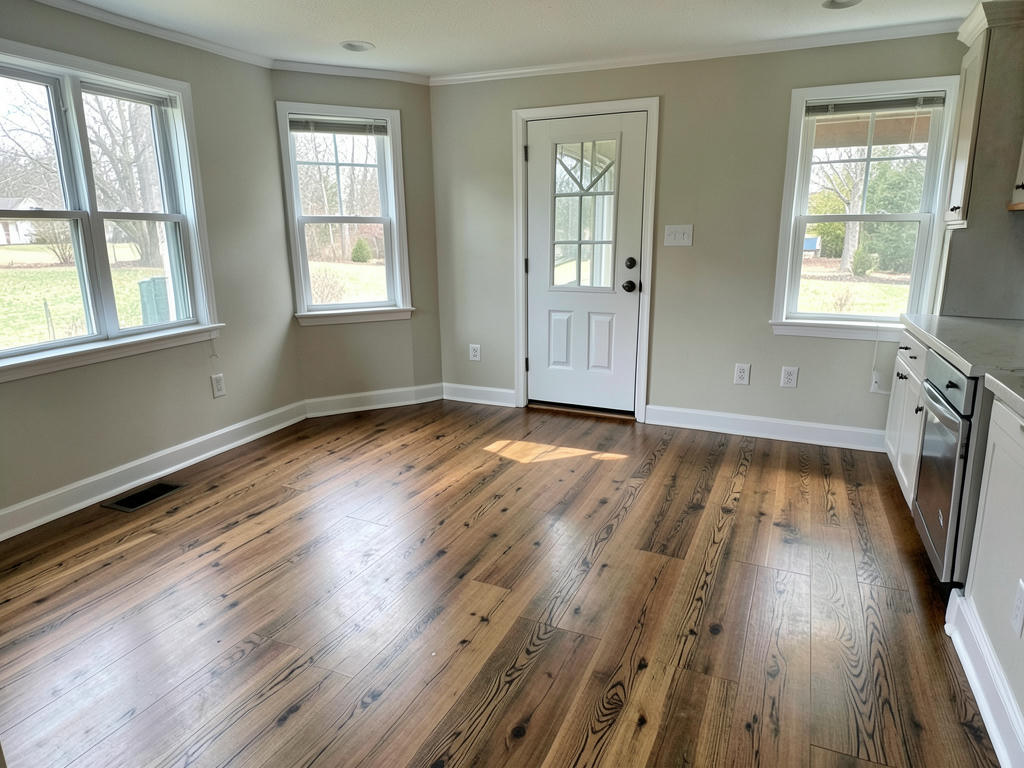
Your lighting and paint choices also affect how much finishing is sensible. Side lighting from a window can reveal slight ridges that overhead light hides, and glossy paint tends to emphasize surface differences. Matching an existing texture can be less predictable than finishing a new, uninterrupted wall because older texture may have been painted repeatedly. For connected flooring and interior updates, consider the order of dusty wall work and finished surfaces. Discuss the desired appearance under normal room lighting, not just a close inspection of the patch.
What affects drywall repair time and scope?
Drying time often controls the schedule more than the time spent applying compound. A small patch can require several separate work stages even when each stage is brief. Larger installations add measuring, cutting, hanging, corner work, and more seams to finish. Temperature, humidity, ventilation, compound type, and coat thickness all influence drying. Clarksville's humid summers make indoor conditions worth discussing, but outdoor weather alone does not determine readiness. Compound needs to be dry through the coat, not merely pale or firm on its surface.
Access and finish expectations can expand the scope beyond the damaged square footage. High ceilings, stairwells, crowded rooms, numerous corners, and several scattered patches all change the work involved. Matching texture or preparing a strongly lit wall can require wider finishing areas. If a project also includes interior door replacement, settle opening dimensions and jamb details before final wall finishing. Similarly, plan baseboard installation around wall repairs so new trim is not repeatedly removed to reach unfinished drywall edges.
How should you prepare for drywall work in Clarksville?
Clear access and a defined finish expectation help you prepare for drywall work. Move furniture, wall decorations, and fragile belongings away from the work area, and identify a practical route for carrying panels indoors. Drywall sheets need more turning space than a small patch kit. Discuss floor protection, dust containment, and access to adjacent rooms before work begins. Sanding produces fine dust, so keeping sensitive belongings outside the work zone is sensible even when containment is planned. Tell us which rooms need to remain usable.
Photos and a short description are useful starting points when you contact us. Include a wide view, a close view, approximate dimensions, and any known history of leaks or previous repairs. Ask how the repaired area will transition into the existing wall, what finish is planned, and who handles primer and paint. Also identify outlets, fixtures, or trim near the damage. We can discuss drywall work alongside your residential remodeling needs, with the wall condition and intended room use helping define the scope.
Call (931) 220-4607 to discuss your project
Talk with us about your drywall repair
Call • (931) 220-4607Questions
Questions about repairing and installing drywall
Can you repair drywall without replacing the whole wall?
Yes, localized damage can often be repaired without replacing the whole wall if the surrounding drywall is sound. A supported patch replaces the damaged area, and tape and compound blend its edges outward. Soft board, widespread damage, or unresolved moisture may make a larger replacement more appropriate than a small surface repair.
How long does a drywall patch take?
A drywall patch often needs several work stages separated by drying time, rather than one continuous session. The size of the repair is only one factor. Compound selection, indoor humidity, coat thickness, texture matching, and the required finish all affect timing. Ask about drying intervals as well as active work time when planning room access.
Can you put new drywall over water-damaged material?
Water-damaged drywall should not simply be covered without evaluating the moisture source and material condition. The cause needs correction, and affected areas need appropriate drying or removal before closing the wall. Covering soft or damp board hides the problem rather than resolving it and can leave an unsuitable base for new finishes.
What should I ask when searching for drywall repair and installation near me?
Ask what preparation, materials, finishing, and cleanup the proposed scope includes. Clarify whether the plan covers isolated patches or a broader wall surface, and discuss texture, primer, and paint separately. For your Clarksville project, share photos and room-use needs so the conversation addresses the actual wall condition rather than just its approximate dimensions.
Will a repaired drywall patch disappear after painting?
A patch may remain noticeable if texture, surface flatness, primer, or paint sheen differs from the surrounding wall. Wider feathering and suitable priming help reduce the contrast, but existing finishes and lighting affect the result. Painting to a natural stopping point, such as a corner, can make differences less apparent than touching up only the patch.