Home/Flooring & Interior Updates/Hardwood Floor Installation
Go2you Construction LLC
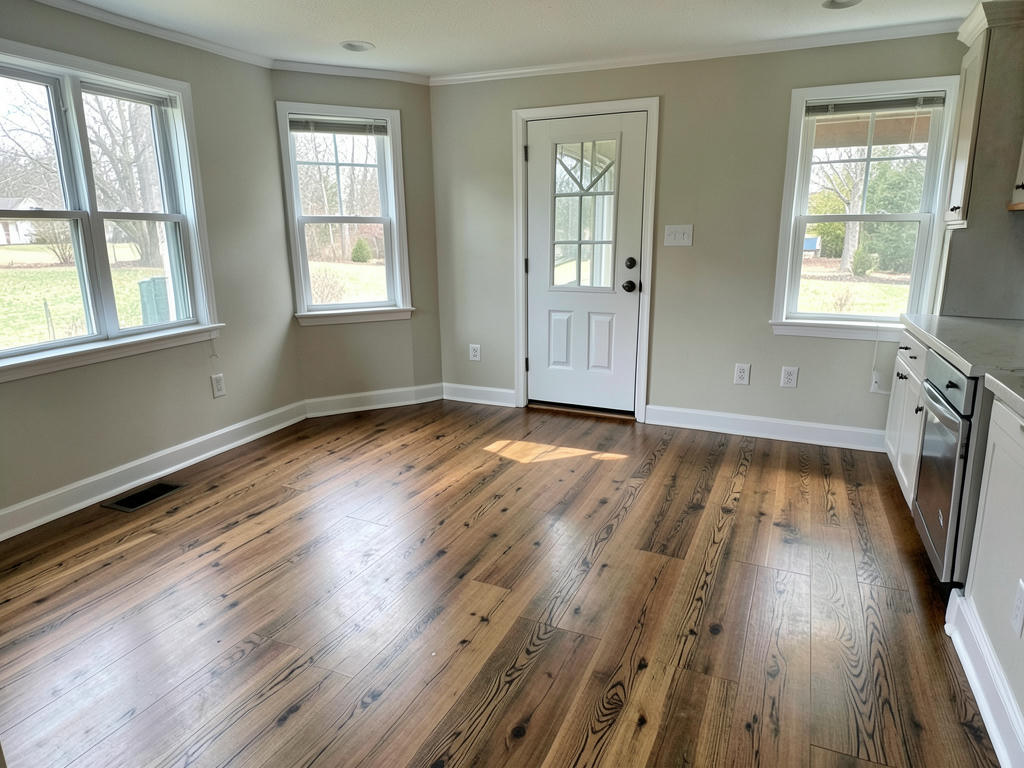
Hardwood floor installation in Clarksville, TN
Plan the surface beneath every step
Hardwood floor installation in Clarksville, TN starts with choosing wood that suits your rooms and the surface underneath. We help you consider the flooring project alongside door clearances, room transitions, and interior details so your plans account for more than the boards.
Which hardwood flooring fits your Clarksville home?
Solid and engineered hardwood have different installation requirements, so the choice starts below the visible surface. Solid hardwood consists of wood through its thickness, while engineered hardwood has a real wood surface over a layered core. Product specifications determine suitable locations, subfloors, and fastening methods. Some engineered products permit installation over concrete with an approved system; that does not make every wood floor suitable for every slab. We encourage you to bring product information into the discussion before ordering materials, particularly for rooms where the existing floor construction is uncertain.
Species, board width, surface texture, and finish all influence everyday appearance. Harder species generally resist denting better, but no wood is dent-proof. Wider boards make moisture control especially important, and pronounced grain can make small marks less noticeable. Prefinished boards arrive with their finish applied; unfinished boards require sanding and finishing after installation. Think about pets, tracked-in grit, furniture movement, and the sheen you prefer. If you are comparing wood with other materials, our flooring and interior updates page places hardwood within the broader range of interior work we offer.
How is the subfloor prepared for hardwood?
A stable, suitably flat, dry subfloor is essential to a successful hardwood installation. Preparation generally starts with identifying the existing layers and checking for movement, damaged areas, adhesive residue, and uneven spots. Flat does not necessarily mean level: the floor must meet the flooring manufacturer's flatness requirements even if the room has a slight overall slope. Loose panels may need attention before new boards cover them. New hardwood can replace a worn surface, but it cannot correct structural movement or an unresolved moisture source simply by covering it.
Moisture checks help determine whether materials and site conditions are ready for installation. Clarksville has humid summers and cold winters, making indoor conditions relevant to wood movement throughout the year. Acclimation should follow the product instructions and moisture readings rather than an assumed number of days. Wood subfloors and concrete require different evaluation methods, and some assemblies need a specified vapor-control system. Staining, persistent dampness, or soft areas should be investigated first. Concealed damage discovered after floor removal can expand the preparation work and change the project's sequence.
What happens during hardwood floor installation?
Hardwood installation follows a layout plan before boards are fastened or bonded. The starting line establishes alignment, while room dimensions help avoid an unnecessarily narrow final row. Board direction should account for the supporting structure, product instructions, sightlines, and adjoining rooms. Mixing boards from multiple cartons can distribute natural color and grain variation. End joints need appropriate spacing, and the perimeter needs the expansion clearance required by the manufacturer. Doorways, hearths, and fixed cabinetry deserve attention early because they affect cuts, transitions, and where the floor can move.
The installation method depends on the product and the floor assembly. Nail-down or staple-down systems require an appropriate wood substrate; glue-down systems require compatible adhesive and surface preparation. Some engineered floors use a floating method, but only when designed for it. Jambs may need undercutting so flooring fits beneath them without being pinched. Expansion spaces are generally concealed with trim, not packed tightly with filler. If the new floor height changes the wall finish detail, we also offer baseboard installation as a separate part of your interior update.
What affects the scope and timing of a hardwood project?
Room size matters, but preparation and detail work can influence the schedule just as much. Removing several flooring layers, correcting subfloor irregularities, and working around many closets or angled walls add steps. A large open room may be simpler to lay out than several small connected rooms. Floor height changes can also affect doors, transitions, and nearby appliances. Before defining the scope, clarify which rooms are included, what remains in place, and how the new hardwood will meet existing flooring. Matching an older floor's color and profile may require additional consideration.
Material readiness, installation, and finish curing are separate parts of the timeline. Acclimation can take several days or longer depending on the product and conditions; readings matter more than a fixed waiting period. Installation may take several working days across multiple rooms, with additional time for substantial preparation. Site-finished flooring adds sanding, coating, and drying stages. Prefinished flooring avoids on-site finish application, although adhesive systems may still require restricted access. Ask when light foot traffic, furniture placement, and rugs are appropriate, because those milestones can differ even within one project.
How should you prepare for hardwood floor installation?
Preparing the rooms and settling material decisions before work begins helps keep the project clearly defined. Identify furniture, fragile items, electronics, and closet contents that need to move, and discuss who handles each task. Keep children and pets away from active work areas. Decide how you will reach rooms that remain in use and where materials can be stored under suitable conditions. Ask about dust-producing stages and access restrictions rather than assuming every room will stay usable. Normal indoor temperature and humidity should be maintained according to the flooring manufacturer's instructions.
Bring your flooring specifications, room priorities, and questions about adjoining surfaces to the planning discussion. Useful questions include whether the subfloor needs correction, which moisture-control approach applies, and whether doors will clear the new floor. If clearance requires more than a minor adjustment, interior door replacement may be worth discussing separately. After installation, use a cleaner approved for the finish, remove grit regularly, and fit furniture with suitable protective pads. Avoid standing water and steam cleaning unless the manufacturer expressly permits it; wood flooring needs moisture-conscious care.
Questions
Questions about hardwood floor installation in Clarksville
Can hardwood flooring be installed over my existing floor?
Hardwood can sometimes be installed over an existing floor, but only when the product instructions and underlying assembly allow it. The existing layers must be stable, suitably flat, and compatible with the chosen installation method. Added height can affect doors and transitions. Removal may be necessary to inspect damage, address movement, or establish a suitable fastening surface.
Is engineered hardwood the same as laminate flooring?
Engineered hardwood is not the same as laminate: it has a real wood surface over a layered core. Laminate typically uses a decorative image beneath a wear layer. Engineered wood's refinishing potential depends on its wear-layer thickness and manufacturer guidance. Compare actual product specifications rather than assuming all engineered flooring can be sanded or installed the same way.
Can new hardwood fix squeaky or uneven floors?
New hardwood alone does not reliably fix squeaks or unevenness; the underlying cause needs attention first. Squeaks may come from movement between components, while uneven areas may involve the subfloor or supporting structure. Addressing accessible problems before installation avoids hiding them beneath a new surface. The extent of corrective work depends on what inspection and removal reveal.
What should I compare when searching for hardwood floor installation near me?
Compare the proposed preparation, flooring specifications, installation method, and finishing details—not just the area being covered. For hardwood floor installation in Clarksville, ask how moisture readiness will be assessed and how transitions will be handled. A clear scope should distinguish removal, subfloor corrections, trim, and material responsibilities so you understand what your project includes.
Does Go2you Construction install hardwood outside Clarksville?
Yes, we serve Sango, Woodlawn, Adams, Cumberland City, Dover, Fort Campbell, and Oak Grove in addition to Clarksville. Call (931) 220-4607 to discuss your location and hardwood flooring plans. Our business hours are Monday through Friday, 7:00 a.m. to 5:00 p.m.; we are closed Saturday and Sunday.